Why Did Gasolina Get Popular Again Why Did Gasolina Make a Comeback
Canadians are finally returning to the role after ii years of pandemic restrictions, and they're are making March Intermission and summer travel plans. They are also being confronted past record-high gasoline prices at the pumps, leaving them wondering: Why is gasoline so expensive? How long will they stay this mode? What can be done?
There are obvious and non-and so-obvious answers to these difficult questions. The cardinal driver of gasoline prices is the cost of a barrel of oil and, like other bolt, oil prices are driven past the dynamics of supply and demand. Right now, supply is very tight.
During the pandemic, oil apply plummeted and then slowly recovered. It is merely now reaching pre-pandemic levels. In response to that demand plunge, companies mothballed new exploration projects and reduced the production of current ones, cutting supply drastically.
Every bit economic recovery began, companies could not easily ramp upwards production. Yet prices remained low for near of that period. Moreover, oil wells are not water faucets: they have time to increase production. They besides need the money and social license to practise so, and both have been defective of late.
The recent history of oil product
1 trouble is the increasing political hazard of boosting production. Over the past several years, most governments have placed big policy emphasis on addressing the problem of climatic change. Central to their efforts are reducing oil use and product and making continued use more than expensive. This raises the required render on investment projects, making some new sources uneconomic.
Second, banks, equity investors and other capital providers have become less willing to fund oil and gas projects. They increasingly insist on improved environmental, social and governance functioning (ESG) from the companies they invest in.
Some abstain from the oil and gas sector completely: no matter how well an oil company scores on the Due south and the One thousand categories of ESG, they often score poorly on the East because of the nature of the industry. Consequently, capital acquisition is hard.
Baca juga: Sustainability rankings don't e'er place sustainable companies
Third, regulatory risk — the risk that a regulation change will change an manufacture — inhibits more oil and gas investment. Canada's continuous saga of pipeline development is a case in point. Presidents Obama, Trump and Biden have each reversed their predecessor's position on the Keystone pipeline.
Other pipeline and oil and gas projects in Canada have been delayed or made more expensive by protracted negotiations, more rigorous environmental reviews and political obstacles.
Regulatory risk is also present internationally. In the The states, President Biden cancelled the Keystone pipeline and has outlawed new drilling leases on federal country. Norway's Equinor has pledged to subtract its production of hydrocarbons. All of this has made increasing oil production difficult, and contributed to a supply crisis.
Geopolitics and gas prices
Calculation to the supply crunch is the second component of high oil prices — a geopolitical crisis in a significant oil-producing area.
Russia is among the world'south acme oil and gas producers, habitually ranking in the top three. It supplies Europe with 27 per cent of its oil and xl per cent of its natural gas.
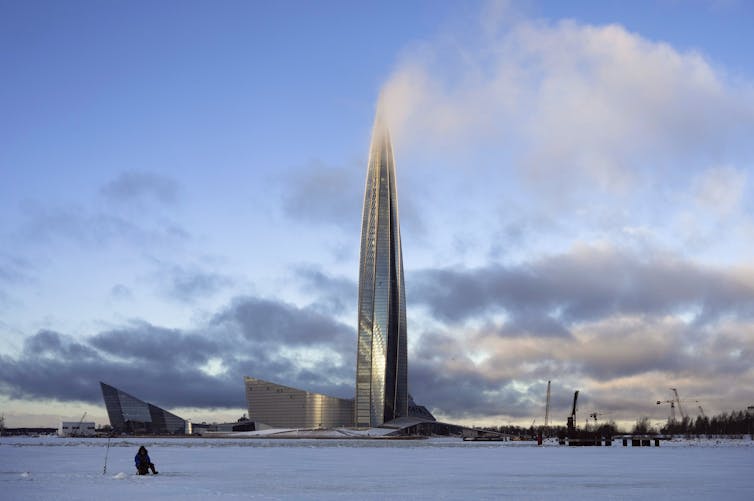
Many European countries remain dependent on oil and gas for heating, transport and industrial production, and the state of war in Ukraine has helped expose that reality.
The invasion has generated shock, fear, and outrage. Public condemnation has been almost universal. Economic sanctions on Russia take been powerful and announced with great fanfare. Merely the flow of Russian oil and gas has not yet stopped. Despite plans to accelerate cuts to fossil fuel apply, Europe all the same needs oil and gas.
The invasion has brought an uncomfortable reality into bold relief. Efforts to reduce carbon consumption have strengthened the geopolitical paw of many oil producing countries.
Of the world'south top 10 oil producers, only iii are democracies. They remain overwhelmingly dependent on oil and gas revenue and are unencumbered by political, regulatory and upper-case letter constraints.
The less oil other sources produce, the more than they can produce, often at fearfulness-induced elevated prices that generate a revenue bonanza.
What can be washed?
What can be done to reduce prices and vulnerability? In the short term, a more diverse supply.
President Biden has released oil from the strategic petroleum reserves, repeatedly chosen on the OPEC cartel to increase production and is fifty-fifty making overtures to Venezuela.
These will help bring prices down. Only these are hardly the measures you would want to base of operations your free energy security on.
Baca juga: How the war in Ukraine will shape Canada's free energy policy — and climate change
Fortunately, there are promising signs of relief at the gas pump. The market will do its piece of work — high gas prices volition motivate more than product, eventually bringing gas prices down.
Yet bubbling underneath volition exist the ongoing process of free energy transition. As other free energy sources grow in importance, calibrating the needed oil supply to demand will be even more difficult. Prices will come downward, merely they will be volatile: consumers should brace for unpredictable gas prices to become the norm.
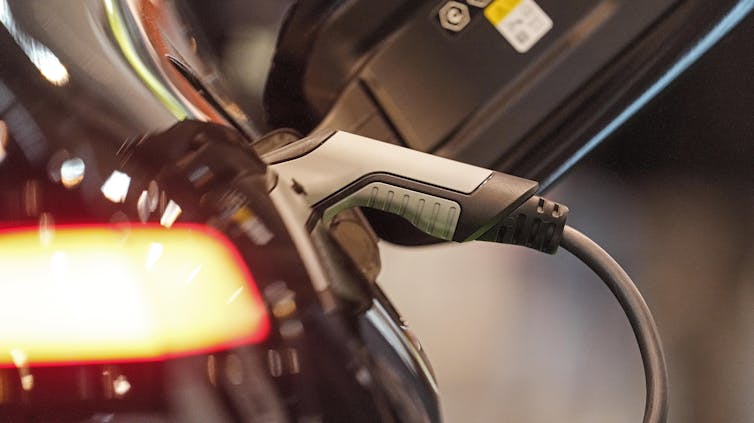
The longer term answer acknowledges reality. The earth volition demand oil and natural gas for decades yet. Alternative energy sources — wind, solar, more natural gas and nuclear — can reduce that dependence, but will not eliminate it — at least non for a decade or more. The problem of existence dependent on oil and gas imports will remain, particularly for Europe.
Oil prices are circadian, volatile and based on a combination of supply, demand and geopolitical forces. Winston Churchill famously noted that security in oil supply lay in variety, and variety alone. Extending his lesson, cultivating a diversity of carbon and not-carbon free energy sources is the all-time way to reduce price volatility and free energy vulnerability. It is a lesson we are relearning now.
Source: https://theconversation.com/why-gasoline-prices-have-soared-to-record-highs-178707
0 Response to "Why Did Gasolina Get Popular Again Why Did Gasolina Make a Comeback"
Enregistrer un commentaire